Download Klavierquintett A-Dur: op. 81. Klavierquintett. Stimmensatz. (Simrock Classical Edition)
Finden Sie Ihre neue Erfahrung durch die Überprüfung Klavierquintett A-Dur: Op. 81. Klavierquintett. Stimmensatz. (Simrock Classical Edition), dieses Buch wird Ihnen Erfahrung über diesem Leben abgeschlossen. Es konnte nicht ständig auf eigene Faust sein, solche Erfahrungen zu erhalten, wenn Sie noch nicht das Geld haben. Um die Fahrten sowie Aktivitäten beabsichtigen, können Sie diese Art von Buch lesen. Ja, das ist eine wirklich beeindruckende Publikation, die zahlreichen Arten von Reisen verwenden.
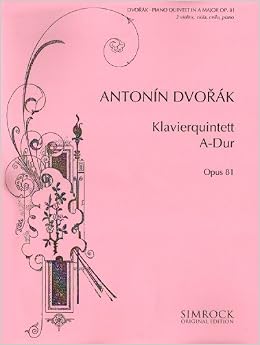
Klavierquintett A-Dur: op. 81. Klavierquintett. Stimmensatz. (Simrock Classical Edition)

Download Klavierquintett A-Dur: op. 81. Klavierquintett. Stimmensatz. (Simrock Classical Edition)
Ultimative Buchsammlungen können erworben werden, wenn Sie immer diese Seite sehen. Entdecken Sie die hier zahlreiche Bücher. Alle Kategorien aus mehreren Quellen, Autoren, sowie Autoren auf der ganzen Welt existieren. Wir nicht nur Führungs Sammlungen verwenden aus dem Inneren des Landes. Zahlreiche akkumulierte Publikationen sind von den Außenstehenden. Dennoch sind die Ziele genau das gleiche. Sie zeichnen sich durch on-line als verbundene Bibliothek zur Verfügung gestellt noch unschätzbare Quellen Guide zu bieten.
Wenn Sie in dieser Art von Umgebung verbleiben, wählen, was Sie sollen, ist eigentlich Klavierquintett A-Dur: Op. 81. Klavierquintett. Stimmensatz. (Simrock Classical Edition) Diese Art der beratenen Soft-Daten Veröffentlichung ist für den Tag-zu-Tag-Analyse. Es wird mit der Forderung Ihrer Aufgaben und Lehren in Verbindung gebracht werden. Um jedoch zu beschreiben, wie es für ausgewählte Sie oder Wörter werden genau das, was Sie gerne. Fantastische Veröffentlichung wird sicherlich nicht ständig zeigen, dass die Worte sicherlich so kompliziert sein werden daher schwer zu begreifen.
Sie können entdecken, wie das Buch kann auf der Grundlage der Situation Ihres fühlt und auch Ideen erhalten werden. Wenn die Zugabe der Buchempfehlung Messe ausreichend ist, verwandelt es sich in einen Weg, um die Besucher anzuziehen, es zu kaufen. Um dieses Problem zu passen, bieten wir heute weiche Daten, die bequem gewonnen werden können. Sie sind möglicherweise nicht so schwer, das Gefühl, durch die in der Buchhandlung um Ihre Stadt suchen.
Streu zu Hause oder am Arbeitsplatz, können Sie es schnell nehmen. Einfach, indem an den Web-Verknüpfung und erhalten auch den Link zum Download, Sie Erwartung dieser Veröffentlichung zu erhalten verstanden wird. Dies ist, was macht Sie fühlen sich zufrieden mit dem Klavierquintett A-Dur: Op. 81. Klavierquintett. Stimmensatz. (Simrock Classical Edition) zu überwinden zu überprüfen. Dieses lesbare Buch hat eine einfache Sprache von allen Personen zu lesen. So können Sie nicht deprimiert fühlen müssen entdecken als hilfreiche Leitfaden für Sie. Bestimmen Sie einfach Ihre Zeit hier das Buch und auch entdecken, die Empfehlung für ein paar andere Publikationen zu gewinnen.
Über den Autor und weitere Mitwirkende
Antonin Dvorak (1841 - 1904) Background Antonin Dvorak was born in Nelahozeves, Bohemia, in 1841, son of a butcher. Although his father intended him to learn the family trade, Dvorak showed early talent as a violinist. He was sent to Zlonice at the age of twelve for formal schooling, studying theory with Antonin Liehmann, as well as learning viola, organ, and piano. He studied German at Kamenice in 1855, and after returning to Zlonice to assist his family in the shop, he entered the Prague Organ School in 1857, graduating two years later. Early experiments After a brief period in a band led by Karel Komsak, he became principal viola in the Prague Provisional Theatre Orchestra in 1862. He held this post for seven years, sometimes playing under the direction of the composer Smetana. He also earned money by giving music lessons, and it was while he was teaching the young actress Josefina Cermakova in 1865 that he composed the song cycle Cypress Trees. Consisting of 18 songs, it is a remarkable and often highly progressive work, perhaps inspired by his love for Josefina. He also wrote his First Symphony, subtitled 'The Bells of Zlonice', in the same year. The influence of Richard Wagner is apparent in Dvorak's early works, particularly his first opera Alfred (1870), and the E minor string quartet (1868-69). He first gained wider recognition with the cantata Hymnus (1873), and the Third Symphony (1873), the latter winning the Austrian State Stipendium in 1875. His success as a composer allowed him to give up orchestral playing and marry Anna Cermakova, Josefina's younger sister. Mature conservatism By the end of the 1870s, Dvorak's early radicalism had been moderated by the influence of Johannes Brahms, champion of German musical conservatism and arch-enemy of Wagner. Brahms was on the jury of the Austrian Stipendium, and recommended Dvorak's music to the publisher Simrock. Works such as the Fifth Symphony (1875) reflect his new-found interest in Brahmsian Classicism, and the Slavonic Dances (1878) show the emergence of his Czech nationalist style which was to become his most distinctive characteristic. In 1884, Dvorak visited England for the first time, where he conducted his Stabat Mater, which was a great success. He composed several works for choral societies in Birmingham and Leeds, including the cantata The Spectre's Bride (1885), the oratorio St Ludmila (1886), and the Requiem (1891). He also wrote his Seventh (1885) and Eighth (188) Symphonies for the Royal Philharmonic Society. Academic recognition Dvorak was becoming an internationally respected composer. He received an honorary doctorate from Cambridge University in 1891, and in the same year was appointed professor of composition at the Prague Conservatory. In 1892, he moved to America to become director of the recently founded National Conservatorium of Music in New York. Although he spent much of his time there teaching, he managed to write some of his most popular music - most notably the Ninth Symphony, 'From the New World', his most famous work. It contains many highly memorable American folksong-inspired melodies, held together in a tight, well-argued symphonic structure. Other works from this period include the String Quartet in F major 'The American' (1893), the Biblical Songs (1894), and the Cello Concerto (1895). In 1895, Dvorak returned to his beloved Czechoslovakia and resumed teaching at the Prague Conservatory, of which he became director in 1901. His last works include the underrated operas The Devil and Kate (1899) and Rusalka (1900). He died in Prague, 1904. Dvorak's distinctive style combines Czechoslovakian and American folk influences with strongly Germanic elements - particularly Brahmsian structure and Wagnerian harmony. He was a master of orchestration, who made full use of the capabilities of the standard 19th-century orchestra, and his symphonies are among the finest examples of the genre. Czech composers of the 20th-century, particularly Suk and Janacek, owe much to Dvorak's pioneering nationalism.
Produktinformation
Musiknoten
Verlag: Benjamin - Simrock (1. Januar 2000)
ISBN-13: 979-0221100252
ASIN: B00006M2CA
Verpackungsabmessungen:
30,2 x 21,4 x 0,8 cm
Durchschnittliche Kundenbewertung:
Schreiben Sie die erste Bewertung
Amazon Bestseller-Rang:
Nr. 893.117 in Bücher (Siehe Top 100 in Bücher)
Klavierquintett A-Dur: op. 81. Klavierquintett. Stimmensatz. (Simrock Classical Edition) PDF
Klavierquintett A-Dur: op. 81. Klavierquintett. Stimmensatz. (Simrock Classical Edition) EPub
Klavierquintett A-Dur: op. 81. Klavierquintett. Stimmensatz. (Simrock Classical Edition) Doc
Klavierquintett A-Dur: op. 81. Klavierquintett. Stimmensatz. (Simrock Classical Edition) iBooks
Klavierquintett A-Dur: op. 81. Klavierquintett. Stimmensatz. (Simrock Classical Edition) rtf
Klavierquintett A-Dur: op. 81. Klavierquintett. Stimmensatz. (Simrock Classical Edition) Mobipocket
Klavierquintett A-Dur: op. 81. Klavierquintett. Stimmensatz. (Simrock Classical Edition) Kindle
COMMENTS